Triceratops
PrehistoricLab Dinopedia
Habitat
Triceratops lived across western North America at the very end of the Cretaceous. The land was a warm, humid plain with rivers, forests and swamps. It was one of the most common large animals there, living alongside Tyrannosaurus.
Social life
Triceratops skeletons usually turn up alone. In a few places, though, young animals were found together, so some scientists think they stuck together at least while they were young. Tyrannosaurus left bite marks on Triceratops bones, so the two certainly met.
Known: Most are found alone; Tyrannosaurus bite marks are found on Triceratops bones. Debated: Whether Triceratops lived in herds; whether its frill and horns were for defence or display.
Appearance
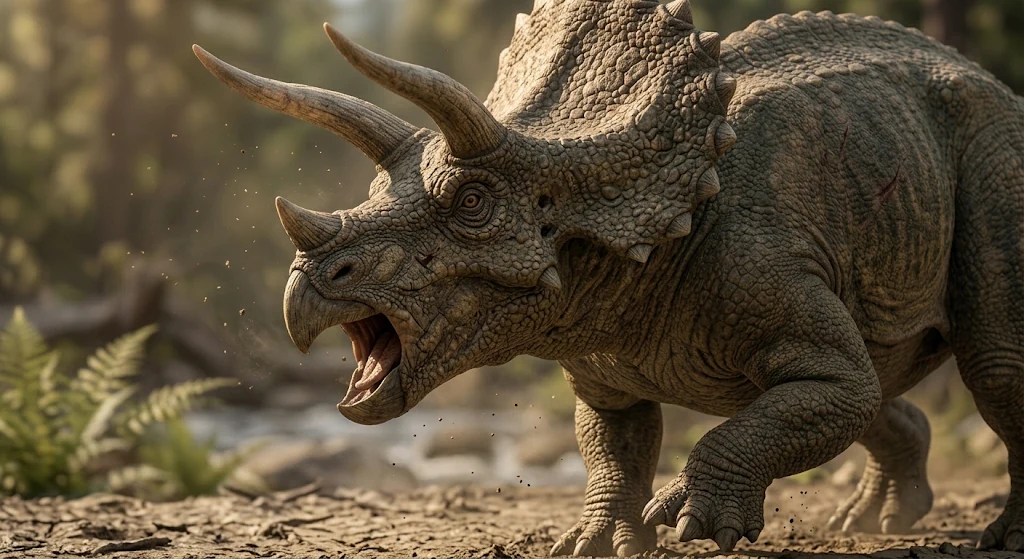
Three horns, a big bony frill and a toothless beak: Triceratops is hard to mistake. Two long horns rose above the eyes and a short one sat on the nose. Behind the beak, rows of cheek teeth sliced up tough plants. The body was heavy, on four legs.
Play the game