Iguanodon
PrehistoricLab Dinopedia
Habitat
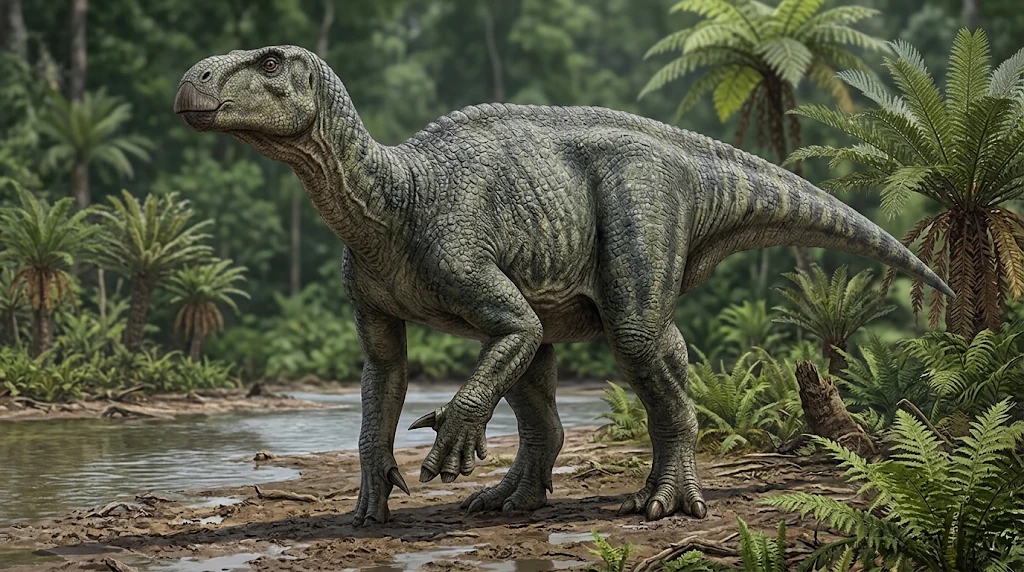
Western Europe in the Early Cretaceous was warm. The vegetation looked a lot like a tropical swamp. Iguanodon lived beside rivers, lakes and floodplains lined with conifers, tree ferns and horsetails.
Social life
In 1878 miners at Bernissart, Belgium, found dozens of Iguanodon skeletons. At first, scientists pictured a herd killed together in a flood. Later studies suggest the animals may have died in several separate events over time, so the single-herd picture is no longer certain.
Known: Many skeletons were found at Bernissart, Belgium. Debated: Whether they died as one herd or in separate events; whether it walked on two legs, four, or both.
Appearance
Iguanodon was a large plant eater with a toothless beak at the front of the mouth and tightly packed grinding teeth in the cheeks. A large spike sat on each thumb. The first scientist to study it took one for a horn on the nose. The arms were strong and the body heavy. It may have walked on all fours.
Play the game