Diplodocus
PrehistoricLab Dinopedia
Habitat
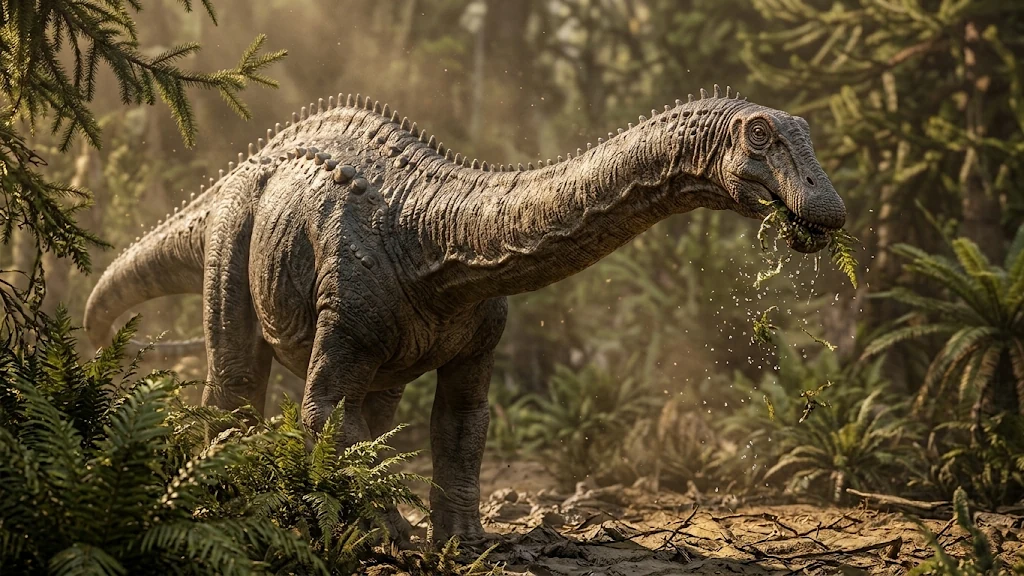
Diplodocus lived on the Late Jurassic floodplains of western North America. Rivers wound through open woodland there. Dry seasons sometimes made food and water scarce. Apatosaurus, Stegosaurus and Allosaurus shared the land.
Social life
Fossil trackways show that some sauropods walked in groups. Several Diplodocus have also turned up in the same area. Many scientists picture herds as a result. How those groups were organised, or how long they stayed together, nobody knows.
Known: Sauropod trackways of walking groups exist; skeletons are sometimes found near each other. Debated: Whether Diplodocus lived in herds all the time; how the young were protected.
Appearance
Diplodocus was extremely long. The neck was long and the whip-like tail even longer, ending in a thin tip. The head was small, with peg-like teeth at the front of the mouth that worked like a rake on leaves. The front legs were shorter than the hind legs. The large nasal openings sat high on the skull. The name refers to the double-beamed bones under the tail.
Play the game