Citipati
PrehistoricLab Dinopedia
Habitat
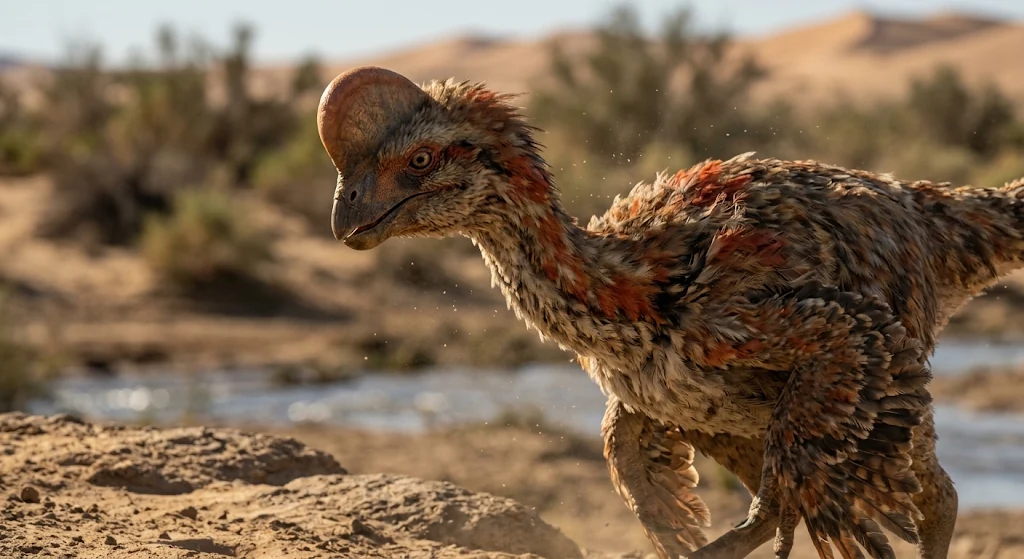
Citipati lived in what is now the Gobi Desert in Mongolia. The area had sand dunes, seasonal streams and small pools. Sudden sandstorms sometimes buried nests and animals, which is why some of its fossils are so well preserved.
Social life
Citipati is famous for its nests. Adults have been found sitting on top of them, arms spread around the eggs the way a brooding bird would. The eggs were laid in a neat ring. It is some of the best evidence that dinosaurs looked after their eggs.
Known: Adults were found on top of nests, in a bird-like brooding posture. Debated: Whether the adult warmed the eggs with its body or only guarded them; whether groups of adults lived together.
Appearance
Think of a cassowary with claws. Citipati had a toothless beak, a tall bony crest, a long neck, long legs and strong clawed hands. Its relatives and the shape of its tail suggest feathers, including a fan of them at the tail end.
Play the game